The pot was innocent enough. Just a pan of tomato sauce, on a Tuesday night, while your phone buzzed on the counter and someone yelled from the living room asking where the remote was. One minute you were stirring, the next minute you were wiping bright red splatters off the stove, the backsplash, your shirt, and the handle of a drawer that apparently lives to collect stains.
You sigh, grab the sponge again, and think the same thing you always think: “Next time, I’ll pay more attention.”
Except you won’t.
There’s a tiny kitchen habit that quietly stops most of these messes before they ever start. And almost nobody talks about it.
The quiet move that keeps your kitchen calm
Spills rarely feel dramatic in the moment. They creep up on you. A pot boils a bit too high, a cutting board tilts toward the edge, a bottle of oil tips just slightly as you reach past it. Then suddenly your nice calm dinner turns into a clean-up operation.
The secret habit starts way before any of that chaos. It’s not about being “careful” or “neat”. It’s about what you do in the first 30 seconds before you cook a single thing.
Picture this scene. You walk into the kitchen tired and hungry. Usually, you toss bags on the counter, pull out ingredients, light the stove, and start chopping wherever there’s a free square of space. Halfway through, there’s onion skin stuck under your cutting board, wet spoon marks near the stove, and a lid sitting in a puddle of sauce.
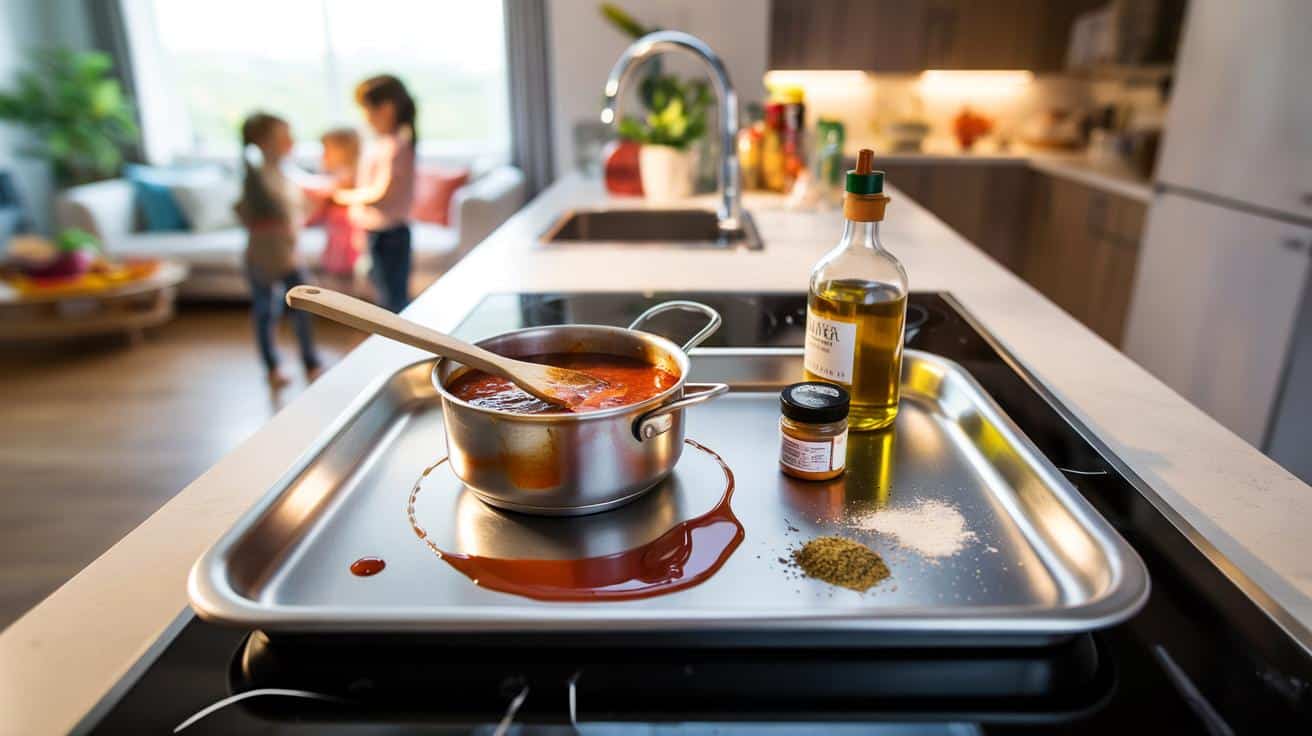
Now replay that same scene with one tiny change. Before you start, you pause, clear a small “work zone”, and slide a tray, sheet pan, or large board into place. Everything you touch will land on this one surface. That’s the habit.
This simple “work zone” ritual has a strange effect. Your chaos suddenly has borders. Spills don’t vanish, they just stop traveling. Pasta water drips onto the tray instead of the floor. Oil splashes against the tray rim instead of your cabinets. It’s like putting bumpers on a bowling lane: you still throw the ball, but the disaster shots stop spilling into the gutters of your night.
*Spill control stops being a reaction and becomes a quiet, automatic routine.*
➡️ Most people underestimate how routine choices affect their finances
➡️ How mental fatigue can appear without emotional stress
➡️ This job allows you to work alone and still earn a comfortable living
➡️ How irregular routines can disrupt your sense of balance
➡️ If your plants stop growing without turning yellow, this internal signal matters
➡️ “I’m over 60 and felt tense in my legs”: the circulation habit that helped
➡️ Psychology explains what it means if you constantly think about how others might perceive you
➡️ “I stopped leaking $65 a week once I saw the pattern”
The habit: always cook “inside” a tray or zone
Here’s the habit in one line: **always give your cooking a defined landing zone before you start**.
Lay a rimmed baking sheet, a large cutting board, or even a silicone mat on the counter near the stove. Chop on it, season on it, rest spoons on it, let messy jars and open bags sit on it. Move your pot next to it when you stir. When something drips or tips, it falls inside that zone.
At the stove, slide a sheet pan under small pots or next to the burner as a “splash field”. Same for the kettle, the coffee station, or the area where you pack lunches.
The funny thing is, almost nobody thinks to do this daily. We tell ourselves we’ll just “be careful” or clean as we go. Let’s be honest: nobody really does this every single day.
The tray habit is more forgiving. You can be rushed, distracted, scrolling recipes with wet fingers. A slipping spoon, a splash of sauce, a leaking carton of cream… all of it lands on that single surface. When you’re done, you lift the tray, rinse it, and you’re done. No sticky mystery ring under the olive oil bottle. No dried milk glued to the counter tomorrow morning. Just one object to clean instead of five random zones.
“Once I started cooking ‘inside a tray,’ my kitchen stopped feeling like a war zone,” laughs Léa, a home cook who batch-preps her meals on Sunday nights. “I still make a mess. It’s just a contained mess now.”
- Use one main tray for prep and messy containers.
- Keep a second, smaller tray by the stove for spoons and lids.
- Choose a tray with edges so liquids don’t slide off.
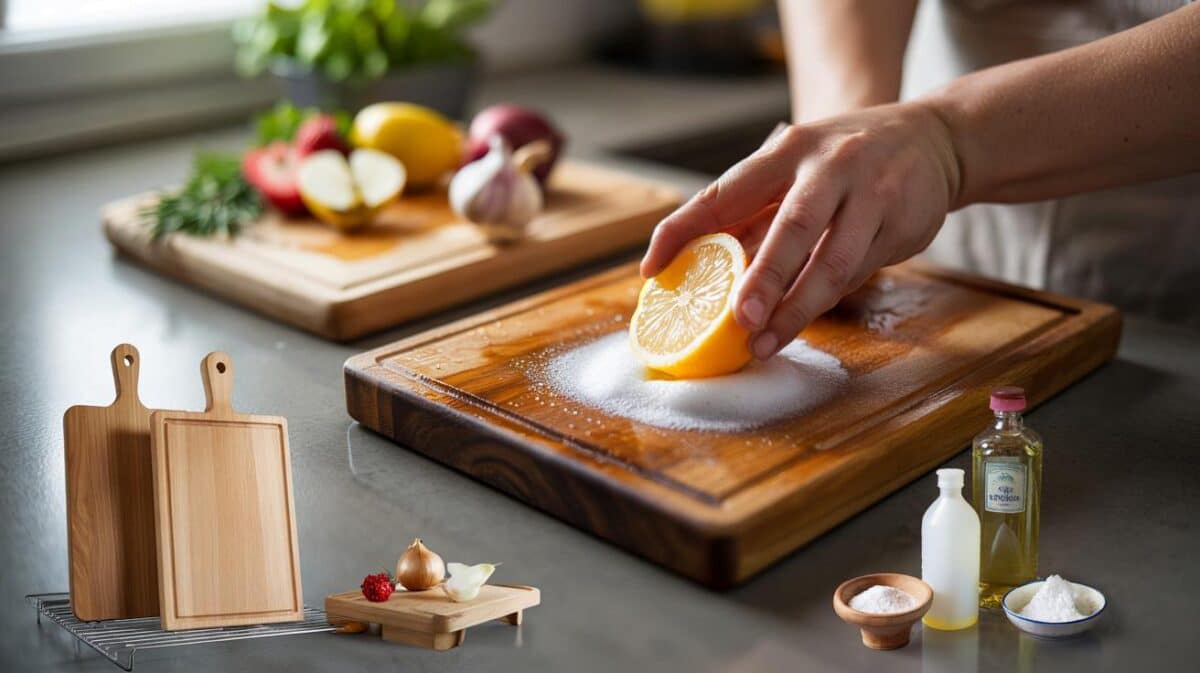
- For tiny kitchens, a chopping board with a groove does the same job.
- Clean the tray right after cooking so it’s ready for next time.
A small habit that changes how your kitchen feels
Once you start cooking “inside a zone”, you notice other things shift. You wipe one tray instead of chasing drips across the counter. Your sleeves stay cleaner. The floor around the stove doesn’t feel slightly sticky three days a week. You spend less time angry at yourself for spilling and more time actually enjoying the smell of garlic in the pan.
There’s also a quiet mental relief that comes with it. You don’t have to be perfect. You’re allowed to stir too fast or misjudge a pour. The tray is there as a safety net, a border between “oops” and “oh no”.
Over time, this habit tends to spread on its own. Maybe you slide a cutting board under the kids’ cereal bowls in the morning. Maybe you put a tray under the blender when you’re making smoothies. Maybe your coffee corner gets its own mat and suddenly those coffee stains don’t reach the wall.
You start to see your kitchen not as a single flat battlefield, but as a set of small, protected islands. And that tiny shift quietly lowers the everyday friction of cooking, cleaning, and just living there.
| Key point | Detail | Value for the reader |
|---|---|---|
| Create a “work zone” | Use a tray, sheet pan, or board under most of your prep | Spills stay contained and clean-up gets faster |
| Keep it near the stove | Slide a tray beside burners for spoons, lids, and splashes | Reduces stove-top mess and sticky splatters on counters |
| Make it automatic | Lay the tray down before you start cooking | Turns chaos control into an easy, repeatable habit |
FAQ:
- Question 1Does this really prevent spills, or just make them easier to clean?
- Answer 1Both. Liquid and crumbs still fall, but they land on a limited surface instead of traveling across your whole kitchen, which stops many “secondary” spills before they spread.
- Question 2What if I have a very small kitchen with almost no counter space?
- Answer 2Use a single, medium cutting board with a groove and treat it as your all-purpose island. Pull it out for prep, slide it slightly toward the stove while you cook, then tuck it away.
- Question 3Do I need to buy a special tray for this?
- Answer 3No. Any rimmed baking sheet, cheap plastic tray, or sturdy board works. One **simple, easy-to-wash surface** is enough to start the habit.
- Question 4Will this slow me down when I’m in a rush?
- Answer 4Most people notice the opposite. The three seconds it takes to put the tray down save minutes of wiping random sticky spots after dinner.
- Question 5What about big spills like boiling pasta water?
- Answer 5The tray habit won’t stop every accident, but pairing it with small moves like not overfilling pots and turning handles inward cuts the risk dramatically.