The soil looked perfect. Dark, slightly moist, no bad smell. The leaves on the plant were a deep, reassuring green. No yellowing, no spots, no drooping drama. And yet… nothing. No new leaf, no fresh stem, just the same frozen silhouette on the windowsill, week after week.
You water, you rotate the pot, you even talk to it a little when no one’s around. Still, the plant behaves like time has stopped. No signal on the outside, but a tiny frustration grows inside you.
Maybe you’ve already had this quiet thought: “Something’s wrong, but I can’t see it.”
You’re not imagining it.
The strange moment when plants stop… without “dying”
There’s a very specific unease when a plant stops growing yet stays perfectly green. It’s like living with a roommate who never talks, never complains, but also never leaves their room. You keep glancing at the pot, trying to spot a new bud, a longer stem, any sign that things are moving.
That silence is actually a message. A plant that refuses to grow, while staying green, is not in crisis. It’s in standby mode. Almost like it has pulled the handbrake inside its own cells.
Take the classic peace lily on the hallway console. The leaves look glossy, upright, almost smug. But for six months, no new flower. No new leaf. You scroll through social media and see lush, overflowing planters, and your lily is basically a green statue.
Garden centers see this all the time. People walk in with photos and say, “See? It’s not dying, but it’s not living either.” The data agrees: indoor surveys show that for many owners, *the number one frustration isn’t yellow leaves — it’s plants that stay stuck at the same size for months.* A weird limbo between success and failure.
Inside the plant, something very precise is happening. When growth stops without leaves turning yellow, the plant is usually not starving. The internal signal is hormonal: growth hormones like auxins and cytokinins are out of balance.
Light, temperature, watering rhythm, and especially the ratio between nitrogen, phosphorus and potassium silently tell the plant: “Pause. Hold your energy. No expansion for now.” The roots may be packed, the plant may lack space to extend, or the light may be just enough to survive but not enough to expand. From the outside, everything looks “fine”. Inside, the message is simple: conserve, don’t grow.
➡️ “I’m over 60 and felt tense in my legs”: the circulation habit that helped
➡️ This is why your fridge smells come back quickly, and how to stop them
➡️ “This comfort recipe is what I cook when I need something reliable”
➡️ Most people underestimate how routine choices affect their finances
➡️ This easy kitchen habit prevents spills before they happen
➡️ A simple adjustment to how you start tasks can reduce resistance immediately
➡️ Psychology explains what it means if you constantly think about how others might perceive you
➡️ The right way to clean cutting boards so odors don’t linger
The internal signal your plant is quietly sending
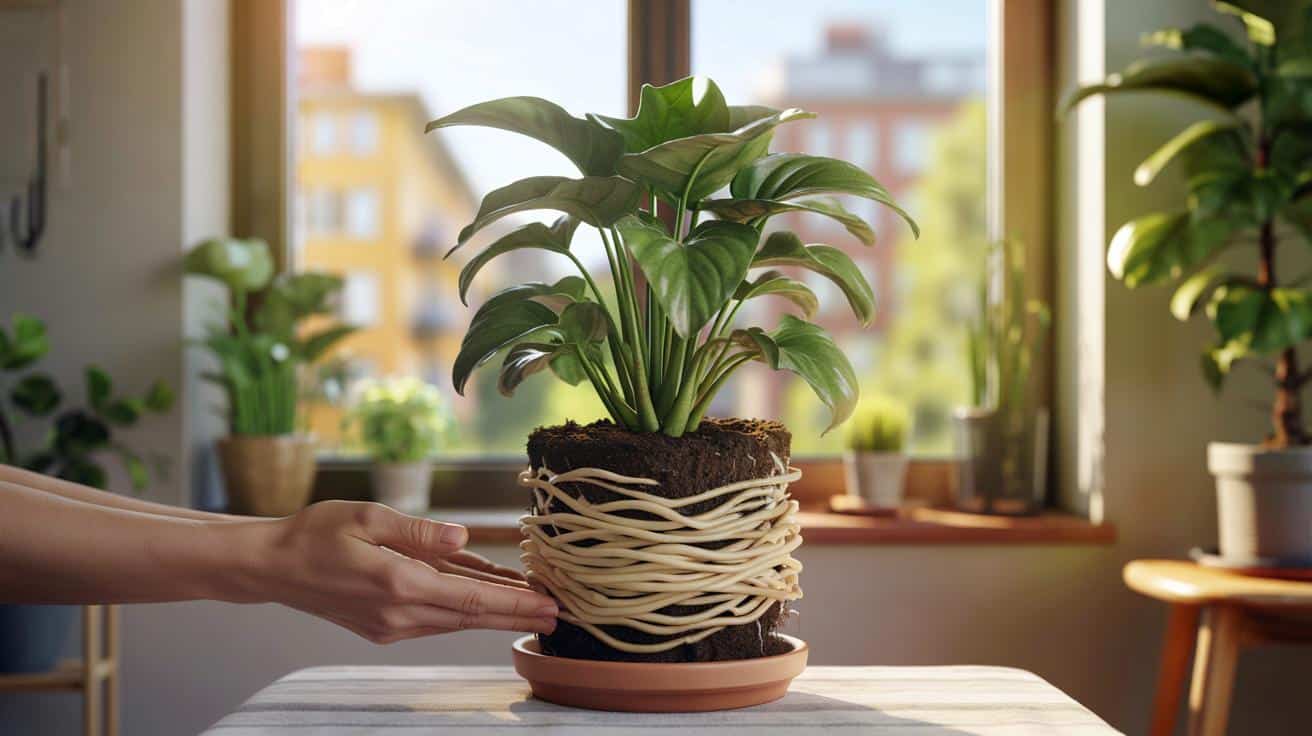
If your plant is green but stuck, the signal to watch isn’t on the leaf. It’s in the roots and the rhythm. Slip the plant gently out of the pot one day. If you see thick white or beige roots circling and pressing around the edge like a spaghetti nest, that’s your internal message right there: “No room, no growth.”
Roots send signals to the rest of the plant when they’re cramped or stressed. When the pot is too small, the plant will often choose survival over ambition. It keeps the leaves alive, but it “refuses” to invest in new ones. Growth freezes long before the leaves show any dramatic color change.
The same goes for watering. Not the amount, but the rhythm. A plant that constantly swings between drought and flood can stay green, especially if it’s hardy, yet halt new growth. The internal alarm says: “Conditions are unstable, hold the line.”
We’ve all been there, that moment when you realize you only water when you remember, not when the soil asks for it. The plant doesn’t throw a tantrum; it just closes the development budget. From your perspective, nothing changes day to day. Inside, the brakes are on.
Nutrition sends another hidden message. A plant bathing in nitrogen-rich fertilizer can stay very green while still growing painfully slowly, because it lacks other elements that support cell division and roots. The balance between N-P-K, but also micronutrients like magnesium, iron and calcium, tells the plant whether it can safely expand.
Let’s be honest: nobody really monitors all this every single day. That’s why this non-yellow, non-growing stage is so common. The plant sits there, looking acceptable, and so we postpone action. Yet that’s the precise moment when your intervention can restart growth with surprisingly little effort.
How to “unlock” a plant that’s stuck on green
The first move is almost always to check the roots and the pot. Choose a size up, not a giant upgrade. One or two sizes larger is plenty. Loosen the outer ring of roots gently with your fingers so they can explore new soil.
Use a light, airy mix rather than heavy garden soil. Add perlite or small bark for drainage if you can. That new space under and around the root ball is like opening an extra room in a tiny apartment: suddenly, the plant has a reason to grow again. Often, within a few weeks, a new leaf finally appears.
The second move is to stabilize the routine instead of complicating it. Water deeply, then let the soil dry to the level your specific plant prefers, not to what a random chart says. Put your finger in the soil. Lift the pot to feel its weight. Those two gestures tell you more than any gadget.
Many people, faced with a static plant, throw every solution at it: more fertilizer, new position, constant misting. The plant receives mixed messages and stays in neutral. A calmer, steady rhythm is far more reassuring for its internal “decision” to grow. *Consistency is often louder than enthusiasm.*
Then comes the subtle part: light and feeding. Move the plant closer to a natural light source without baking it in direct, burning rays. Slightly brighter light often does more to restart growth than any fancy product. Feed sparingly with a balanced fertilizer during the plant’s active season, not blindly, all year round.
Sometimes, the smartest thing you can do for a stuck plant is to stop throwing random care at it and give it clear, simple conditions that don’t change every few days.
- Repot when roots circle the potCheck once or twice a year, not only when leaves look bad.
- Stabilize watering rhythmUse touch and pot weight instead of calendars alone.
- Improve light by small movesA shift of 50 cm closer to a window can transform growth.
- Feed only in growth periodsRespect rest phases; don’t push winter growth indoors.
- Observe before actingOne week of quiet observation often prevents the wrong intervention.
Living with plants that talk softly, not loudly
A plant that doesn’t turn yellow is easy to ignore. It doesn’t scream for help, it just stops writing its story. Once you start reading these quiet internal signals — roots cramped, light too weak, routine too chaotic — you stop waiting for disaster to react.
You begin to see growth not as a default state, but as a decision the plant makes when it feels safe enough. That looks a lot like us, in a way. We also stop “growing” long before things visibly fall apart.
Next time you pass that one green, unchanging plant at home, you might look at it differently. Not as a boring survivor, but as an organism stuck on pause, sending you a soft message: “Conditions aren’t bad, but they’re not good enough to move forward.”
From there, the game changes. You don’t just fight yellow leaves and disasters. You start listening earlier, adjusting earlier, repotting earlier. And suddenly, a tiny new leaf appears, almost shy, and you realize the plant hadn’t given up at all. It was just waiting for you to hear it.
| Key point | Detail | Value for the reader |
|---|---|---|
| Green but not growing | Signals internal pause, not immediate disease | Reduces anxiety and guides attention to real causes |
| Roots and rhythm first | Check root congestion and watering consistency | Offers simple, actionable steps before buying products |
| Light and balance | Adjust brightness and use balanced, seasonal feeding | Improves long-term plant vitality and visible growth |
FAQ:
- Why is my plant not growing if the leaves look perfectly healthy?Because its internal signals — from roots, light, or nutrition — are telling it to conserve energy. The plant chooses survival over expansion, so it stays green but pauses growth.
- How long can a plant stay “stuck” like this?Sometimes several months, even a full season. If it’s green and firm, it can stay in standby quite a while, but gentle changes (repotting, better light) help it leave that state.
- Should I add more fertilizer if growth has stopped?Not automatically. Too much or unbalanced fertilizer can worsen the pause. First check roots, pot size, and light. Then use a balanced product in the growing season only.
- How do I know if the pot is too small?Slide the plant out gently. If you see roots circling densely around the edge or bottom, with little soil visible, it’s time to move one size up.
- Is lack of light possible even if my plant is near a window?Yes, especially with north-facing or shaded windows. If you can comfortably read a book there at midday without turning on a light, it’s usually enough; if not, your plant may be surviving, not thriving.