You open the fridge and there it is again.
That faint sour wave that hits your nose before you even identify what you’re looking for.
You wipe a shelf, toss a suspicious Tupperware, maybe crack the door open for a bit. For a few hours, it feels better. By the next morning? The smell is back, slightly different, somehow worse.
You start to wonder if you’re imagining it, or if something is rotting inside the walls of the appliance itself. Friends say, “Just clean it.” You’ve already done that, twice.
There’s a reason this keeps happening.
And it’s hiding in the tiny details we tend to ignore.
Why fridge smells come back so fast (even after you’ve cleaned)
Most people think nasty fridge odors come from one single forgotten item.
That fuzzy piece of cheese, the unidentifiable leftover in the back, the open onion rolling around in the drawer.
So we hunt the obvious culprits, toss what looks bad and wipe a few surfaces. The smell fades for a bit, like spraying perfume in a musty room. Then life happens, groceries pile up again, and the same stale scent returns.
Odors are rarely just “one thing”.
They’re a slow cocktail of moisture, bacteria, trapped air, and tiny spills you don’t even notice.
Picture this.
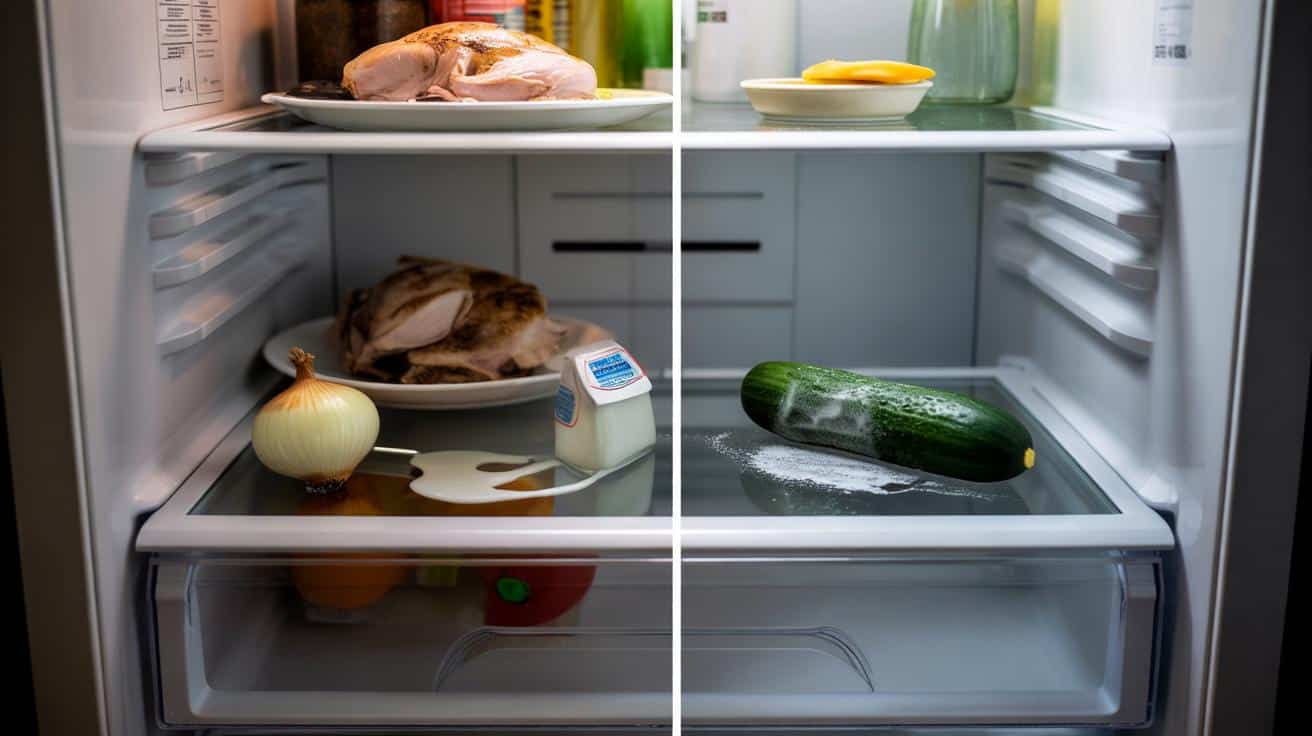
You rush home, unpack a week’s worth of food, shove containers where they fit, promise yourself you’ll “sort it properly later”. A yogurt leaks a teaspoon onto the glass shelf. A cucumber sweats in its plastic. Some cooked chicken sits uncovered “just for tonight”.
You don’t see much. It doesn’t look dirty.
But that mix of protein, sugar, and moisture quietly feeds bacteria and mold in corners you never wipe: under the drawers, in the door seals, inside the drip tray you’ve never heard of.
A 2022 home hygiene survey in Europe found fridges among the most contaminated surfaces in the home, right after kitchen sponges and sink drains.
The smell is just that invisible reality, pressing its nose against yours.
➡️ The right way to clean cutting boards so odors don’t linger
➡️ Most people underestimate how routine choices affect their finances
➡️ “I stopped leaking $65 a week once I saw the pattern”
➡️ How monthly financial planning changes once children enter the picture
➡️ Psychology explains what it means if you constantly think about how others might perceive you
➡️ This job allows you to work alone and still earn a comfortable living
➡️ This easy kitchen habit prevents spills before they happen
➡️ How mental fatigue can appear without emotional stress
Smells come back because they’re rarely only on the visible surfaces.
They soak into rubber gaskets, sit in stagnant condensation, and get recirculated by the fridge’s own airflow.
Most modern fridges move air around to keep a stable temperature. Great for food safety, less great for a messy onion juice spill that dripped into the vent. That odor gets sucked into the circulation and blown back out every time you open the door.
And then there’s the temperature issue.
A fridge that’s even 2°C too warm lets bacteria grow faster, especially on meat and dairy. You might not see mold yet, but the smells start early. By the time you’re cleaning, you’re already late in the story.
How to actually stop recurring fridge odors (not just mask them)
Start with what almost nobody does: a deep clean that includes the “hidden organs” of your fridge.
Turn it off, empty it completely, and pull out every removable shelf and drawer.
Wash them in hot water with a bit of dish soap and a handful of baking soda. Then dry them well, really well. While that’s happening, wipe inside the fridge with a mix of warm water, a little soap, and white vinegar. Pay special attention to the door seals and the tiny grooves where crumbs and liquids love to hide.
If you can access it, clean the drain hole at the back and the drip tray behind or underneath the fridge.
That’s the graveyard where old smells go to haunt you.
This is where the emotional part kicks in.
You already have a job, a life, kids, deadlines. Who wants to disassemble a cold box on a Tuesday night?
So you do a half-clean, promise yourself you’ll “go deeper next weekend”, and live with that faint leftover smell. Let’s be honest: nobody really does this every single day.
The trick is not perfection.
It’s small, realistic routines that stop smells before they become a problem. Cover strong foods like onions, fish, cheese. Keep raw meat on a plate or tray, not free on a shelf. Wipe tiny spills the same day, even if it’s just with a piece of paper towel.
*Odors are easier to prevent than to erase once they’ve settled in.*
Once the fridge is clean, you can set up a simple little “odor shield” inside.
And no, that doesn’t mean buying a fancy deodorizer online.
A long-time appliance repair tech told me: “Ninety percent of smelly fridges I visit don’t need parts. They need airflow, a proper temperature, and one bowl of baking soda.”
Place an open box or a small bowl of baking soda on a middle shelf. Replace it every month or two. You can also use a bowl of coffee grounds or a few tablespoons of activated charcoal for very stubborn odors.
Then create a visual checklist taped inside the door:
- Is the temperature between 3°C and 5°C (37°F–41°F)?
- Are leftovers dated and older than 3–4 days tossed?
- Are strong-smelling foods covered or sealed?
- Are door seals clean, without crumbs or sticky spots?
- Is there any visible condensation or standing water?
This tiny ritual keeps your nose from being surprised again next week.
Living with a fresher fridge (and less invisible stress)
There’s something oddly calming about opening a fridge that doesn’t argue with you.
No hidden wafts, no guessing game of “what died in here”, just neutral cold air and food you can actually see.
That calm doesn’t come from a miracle product. It comes from that quiet decision to stop treating smells as “bad luck” and start reading them as signals. Maybe you learn you always forget the salad drawer. Maybe you realize you buy more than you can eat in a week. Maybe it’s that one sauce bottle that always leaks a drop.
When you start noticing these patterns, the fridge stops being an enemy and becomes a kind of honest mirror of your daily life. How you rush, how you store, how you waste, how you care for small invisible things.
You don’t need a perfect, Instagram-ready interior. You just need a space where food isn’t left to secretly rot behind a jar of pickles. A space that smells like… nothing at all.
That silence, every time you open the door, is weirdly satisfying.
And once you’ve felt it, those old recurring odors start to feel less like a mystery, and more like a story you already know how to change.
| Key point | Detail | Value for the reader |
|---|---|---|
| Deep cleaning hidden areas | Include seals, drain hole, and drip tray, not just shelves | Stops odors from coming back a few days after cleaning |
| Daily micro-habits | Cover strong foods, date leftovers, wipe small spills quickly | Prevents bacteria growth and lingering smells with minimal effort |
| Natural odor control | Use baking soda, coffee grounds, or charcoal plus correct temperature | Keeps the fridge neutral-smelling without costly products |
FAQ:
- Why does my fridge still smell after I clean it?
Because odors often hide in places you didn’t reach: door seals, the drain hole, drip tray, and under drawers. If those stay dirty, the smell returns quickly even if shelves look spotless.- How often should I deep-clean my fridge?
For most households, every 2–3 months is enough, with quick wipes of spills during the week. If you cook a lot with fish, garlic, or strong cheeses, monthly deep cleans help keep odors away.- Does baking soda really work for fridge smells?
Yes, it absorbs odors from the air, especially mild ones. It won’t fix rotten food or a dirty drip tray, but after a proper clean, an open box of baking soda helps keep the air neutral.- What temperature should my fridge be to avoid bad smells?
Aim for 3°C–5°C (37°F–41°F). Warmer than that encourages bacteria growth and faster spoilage, which means stronger smells long before food looks obviously bad.- Are strong fridge deodorizers safe around food?
Most commercial fridge deodorizers are designed to be food-safe, but you don’t need them. Simple ingredients like baking soda or activated charcoal work well without adding extra chemicals next to your groceries.