The smell hit first.
You’d washed the cutting board right after dinner, stacked it neatly to dry, and gone on with your evening. The next day, you pull it out to slice some apples…and there it is. A faint, stubborn ghost of garlic and onion, clinging to the wood like a bad memory.
You rinse it again, maybe scrub a bit harder, maybe drown it in dish soap. Still, when the knife presses down, that scent rises up from the grain. At some point you start wondering if the board itself has turned on you.
The truth is, the problem isn’t your cooking.
It’s the way your cutting board is quietly holding onto everything you’ve ever chopped on it.
The hidden life of smells in your cutting board
A cutting board looks like a flat, simple object, but it behaves more like a sponge with an attitude. Every line from your knife opens up tiny channels where juices, oils, and microscopic food particles can slip in and stay. That’s why onions chopped two days ago can still haunt your fresh fruit today.
Plastic boards bruise. Wooden boards swell and shrink. Bamboo boards pretend to be rock solid, then develop hairline cuts that trap fish smells for a week. Your nose doesn’t lie: those leftovers are very real, even if you can’t see them.
Picture this: it’s Sunday morning, you’re making a pretty little fruit platter because you’re trying to feel like someone who has their life together. You grab the board you used on Friday night for marinated chicken skewers. You washed it. You scrubbed it. It looked fine.
Then the first slice of strawberry hits the surface, and the scent of old paprika and garlic rises up like a very unwelcome brunch guest. You taste a piece, and there’s this faint savory note where sweetness should be. You hesitate, glance at the trash can, and suddenly your “healthy, aesthetic breakfast” is one step away from becoming takeout.
There’s a reason this happens again and again. Food smells are mostly volatile compounds and fats. On cutting boards, especially wood and tired plastic, those compounds wedge themselves into scratches and pores. Dishwasher heat can warp boards, opening those pores more. Air-drying while still a bit greasy just bakes the aroma in.
The board then becomes a tiny diffuser for every strong ingredient you’ve ever loved: garlic, onion, fish sauce, cilantro, smoked meats. Water and soap remove the obvious dirt, but without the right method, the invisible scent molecules just linger quietly, waiting for the next thing you chop.
The right ritual: cleaning so the smell never sticks
Start right after you’re done chopping, before the juices get comfortable. Rinse the board under hot water, scraping off any stuck bits with a spatula or the blunt side of a knife. Then wash with a simple, unscented dish soap and a soft brush or sponge, moving with the grain if it’s wood.
➡️ This is why your fridge smells come back quickly, and how to stop them
➡️ “I stopped leaking $65 a week once I saw the pattern”
➡️ How irregular routines can disrupt your sense of balance
➡️ Psychology explains what it means if you constantly think about how others might perceive you
➡️ Most people underestimate how routine choices affect their finances
➡️ “This comfort recipe is what I cook when I need something reliable”
➡️ If your plants stop growing without turning yellow, this internal signal matters
➡️ How monthly financial planning changes once children enter the picture
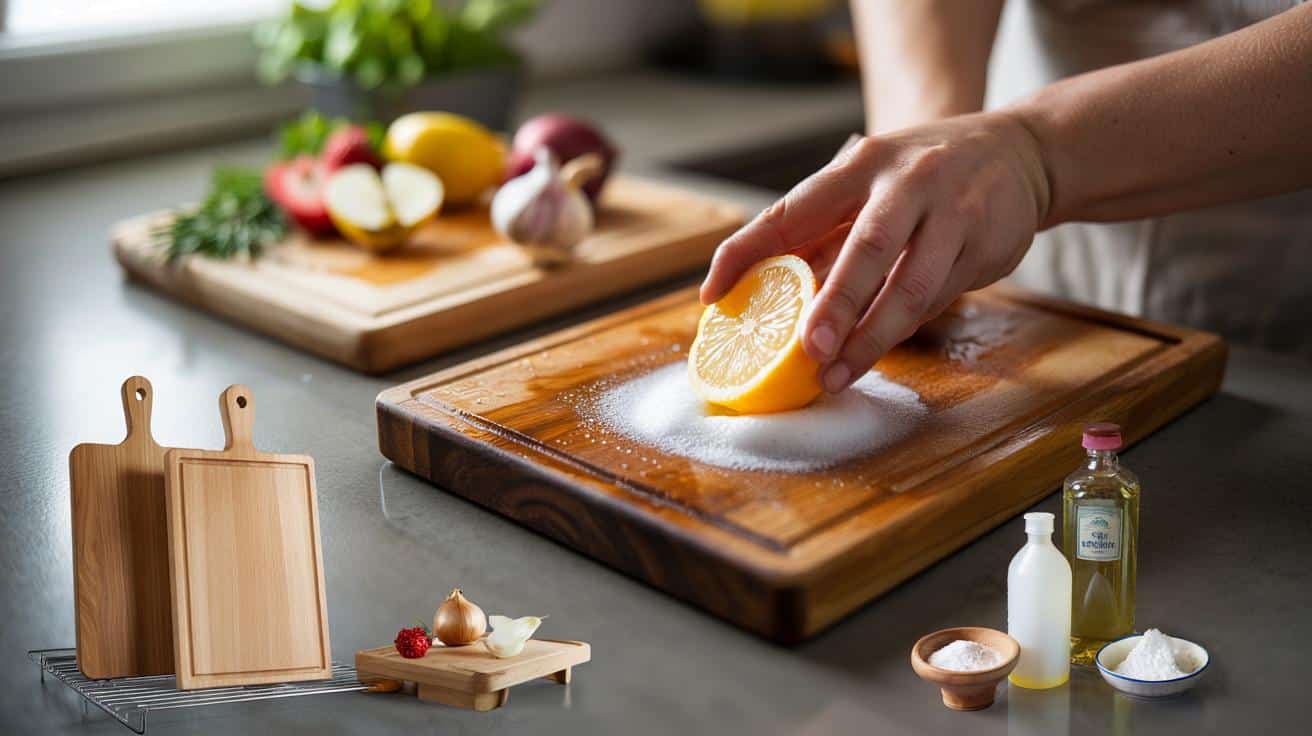
Now the real anti-odor trick: sprinkle coarse salt or baking soda over the damp surface and scrub again. For wood, cut a lemon in half and use it like a scrubber, pressing the juice into the salt. Let it sit 5–10 minutes, then rinse and stand the board upright to dry completely. That little pause is where most of the smell disappears.
This is where daily life collides with good intentions. You’re cooking after work, you’re tired, the pan is sizzling, kids are asking questions from the other room, and the board is just one more thing in the sink. So you rinse quickly, pass a soapy sponge once, and lean it against the wall, still a bit damp and not quite clean.
Do that after chopping garlic, then onion, then salmon, and the board quietly builds its own scent history. We’ve all been there, that moment when you notice your kitchen smells faintly like last week’s dinner and you can’t quite say why. Let’s be honest: nobody really does this every single day. Yet boards that get a “real” clean just twice a week already smell noticeably fresher.
“Think of your cutting board like a cast-iron pan,” says a food safety consultant I spoke to. “If you treat it with respect and clean it the right way, it will outlast your pots. If you neglect it, it will turn on you, quietly, from the inside.”
- Use different boards
One for raw meat and fish, one for fruits and veggies, and ideally one for pungent ingredients like garlic or onions. - Disinfect without ruining it
For plastic, a diluted bleach solution works. For wood, white vinegar or 3% hydrogen peroxide is gentler but still effective against bacteria. - Dry like it matters
Always store your board upright so air can circulate. Laying it flat traps moisture and amplifies odors and warping. - Refresh deeply once a month
Scrub with baking soda, rinse, dry fully, then oil a wooden board with food-grade mineral oil to seal smells out. - Know when to say goodbye
If deep grooves and stains don’t go away, or the smell survives every cleaning, it’s time for a new board.
Living with boards that actually smell…like nothing
When cutting boards stop smelling like old dinners, the whole kitchen shifts a little. Suddenly you can chop watermelon on the same wood where you sliced garlic the night before, and the fruit tastes like fruit, not like a failed experiment. You start trusting your tools again.
The small ritual of rinsing, scrubbing with salt or baking soda, giving the board a minute to rest, then drying it properly becomes strangely grounding. *It’s five extra minutes that quietly raise the level of everything you cook.* You don’t have to become the person who sanitizes like a lab technician, but a simple, consistent routine keeps those ghost smells from moving in permanently.
Once you’ve experienced a completely neutral board, you notice fast when something’s off. And you might even find yourself telling friends, almost proudly, that their haunted onion board doesn’t have to stay haunted.
| Key point | Detail | Value for the reader |
|---|---|---|
| Deep clean with basics | Use coarse salt or baking soda plus lemon for wood, and hot soapy water for plastic | Removes trapped odor compounds without expensive products |
| Drying is non-negotiable | Stand boards upright to let both sides air-dry fully | Prevents lingering smells, bacteria growth, and warping |
| Separate boards by use | Keep one for raw meat, one for produce, one for pungent foods | Reduces cross-contamination and weird flavor crossovers |
FAQ:
- Question 1How often should I deep-clean my cutting board to keep odors away?
- Question 2Can I put a wooden cutting board in the dishwasher if it smells bad?
- Question 3What’s the best way to remove fish or onion smell specifically?
- Question 4Is it safe to use bleach on cutting boards?
- Question 5When do I know a cutting board is too old and must be replaced?